Why are these services needed
Too many people face death and dying without the support they need. Sometimes that means someone has few or no visitors and is at risk of spending long periods alone. But often the reality is more complicated than that.
Family and friends may want to be there all the time, but that isn't always possible. They may be juggling other responsibilities, feeling exhausted, or simply unsure how to cope with what is happening or what to say.
Healthcare teams are also under significant pressure. Even with excellent clinical care, staff cannot spend long periods sitting with a patient who is frightened, distressed or alone.
This is why volunteer services are needed. They help bridge the gap between what families want to provide and what staff have the capacity to offer, meaning people have calm, human presence during a very difficult time.
How we partner with healthcare organisations to build volunteer services
Each volunteer service is built around the needs of the healthcare organisation running it. We work alongside clinical leads, senior staff and wider teams to understand what support is needed locally and how volunteers can make the greatest difference.
This usually includes
meeting staff to understand how care is currently delivered
supporting the partner to plan recruitment and explore funding
outlining the training volunteers will receive
providing ongoing guidance once the service begins
Once a service is up and running, it becomes part of how the organisation care's for people who are dying. The volunteers are our partner's volunteers, with our ongoing support in the form of training, resources and advice.
What this looks like
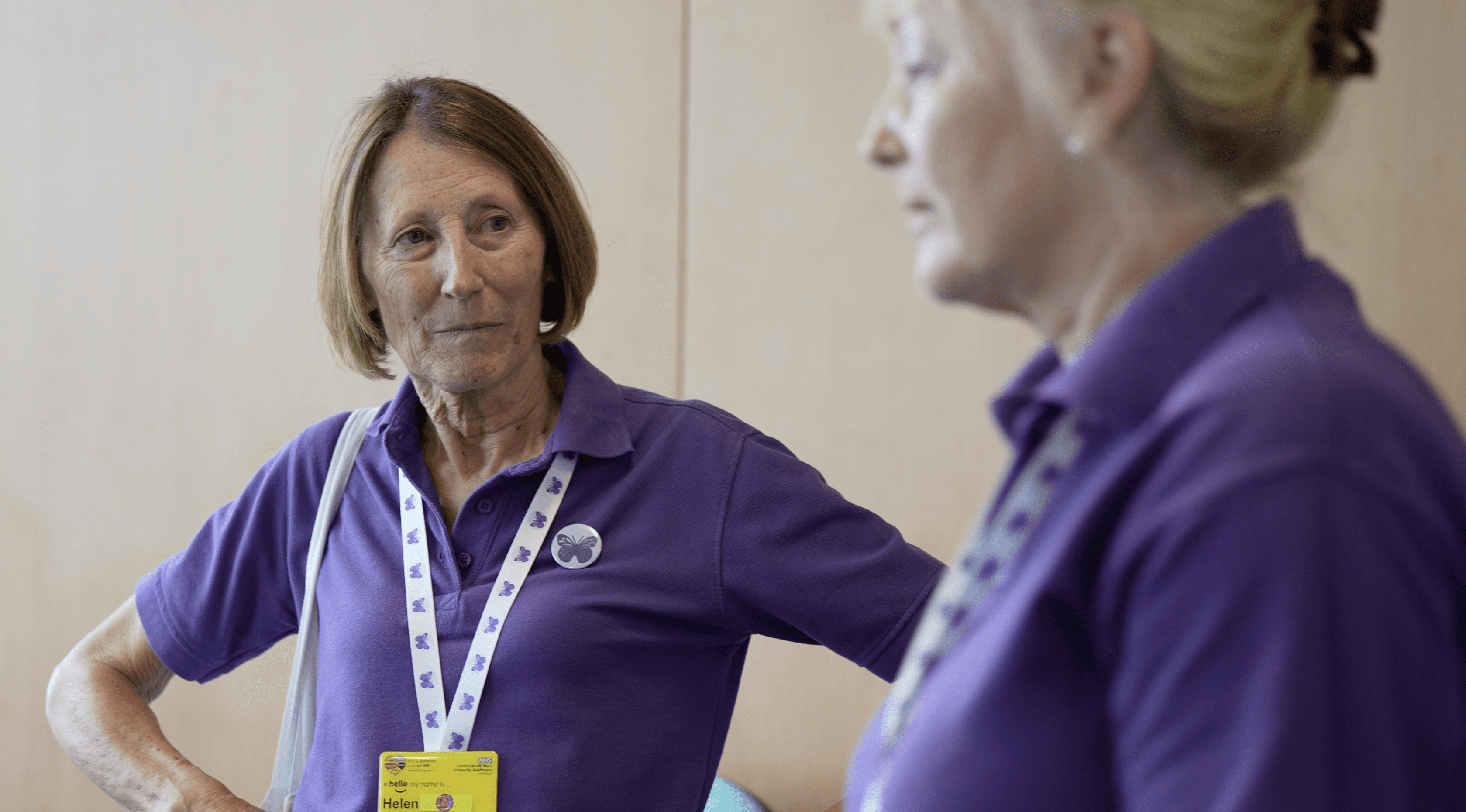
One hospital identified that patients who didn't have relatives nearby often felt isolated during long stays. This insight shaped their volunteer service, which later supported an elderly woman with no next of kin. Volunteers read poetry to her, played music and brushed her hair, offering gentle company throughout her final days.
How volunteer support works in practice
Volunteer support looks different from service to service. For example, some services are ward-based while others support people at home. The intention is always consistent: to offer steady, compassionate presence to people who are dying, and reassurance to those close to them.
Ward‑based support
Volunteers may spend time with people who feel frightened or distressed, sit quietly with them so they're not alone, or stay with them while family members take a break.
They can also help with small comforts, listening, talking, noticing when they might need company, or simply sitting alongside someone during very difficult moments.
What this looks like
A patient who had been noticeably withdrawn shared with a volunteer that he wished he could taste chocolate again. With permission from the nursing staff, the volunteer went to a shop and returned with a packet of Cadbury Buttons. With their support, he let half a button melt in his mouth. His nurse said it was the happiest and most relaxed they had seen him, and he thanked the volunteer repeatedly, calling the moment "great."
Community‑based support
Some healthcare partners run services in people's homes. Volunteers may visit someone who is dying at home when family members need a break, offering companionship, sitting with them when they feel unsettled, or simply providing consistent presence.
Their role complements professional care by bringing time, calm and human connection into a familiar environment.
What this looks like
One family described how volunteers made a significant difference to their dad's final days. Their daily visits offered much-needed respite, and their small acts of kindness, a timely cup of tea and gentle conversations about cherished memories, brought comfort to the whole family at a time when things felt very difficult.
The value of compassionate presence
Every volunteer service we help develop begins with the same aim: to offer steady, compassionate presence to people who are dying, and to ease some of the emotional weight carried by families and staff.
These services are shaped locally, owned by the organisations who run them, and supported by us so they can grow with confidence and care.
If you'd like to learn more about how we work alongside healthcare organisations, or explore practical information about death and dying, the links below may help.
If someone you know is dying, or you need support yourself
Can you help us make a difference?
Hear More From Us
Sign up to our newsletter to stay connected with our work and the people we support.

Anne Robson Trust
17 High Street
Stevenage, SG1 3UN
01438 873 257
© The Anne Robson Trust is a registered charity in England and Wales (no. 1178352). All rights reserved. Privacy Policy